

Advertisement

Clogged Filters, Dirty Tanks?
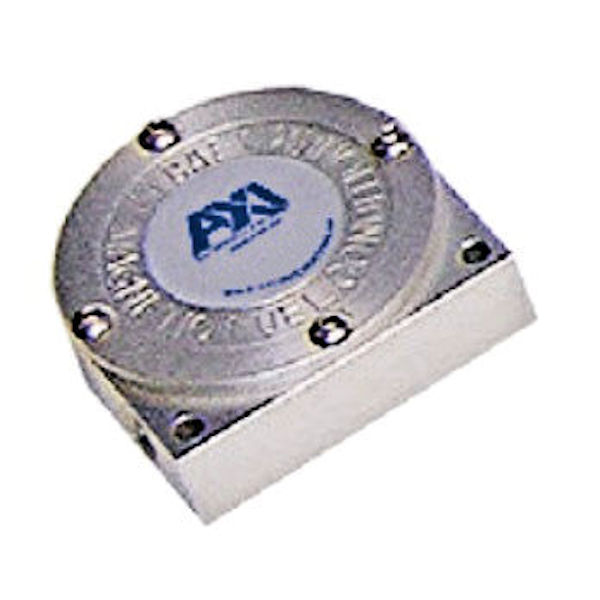
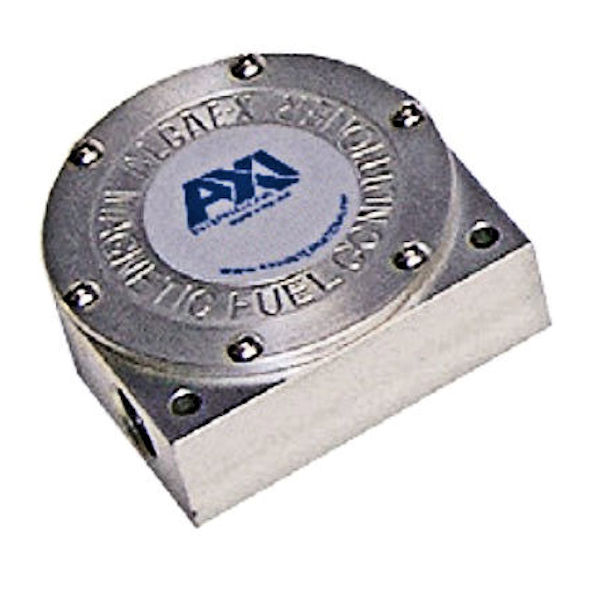
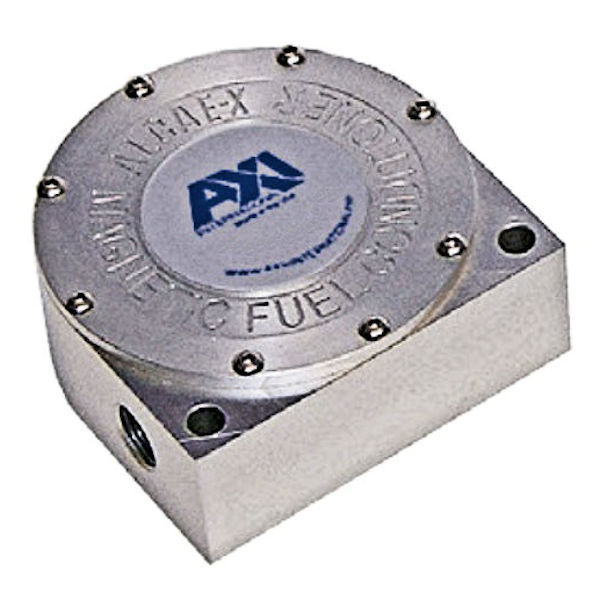
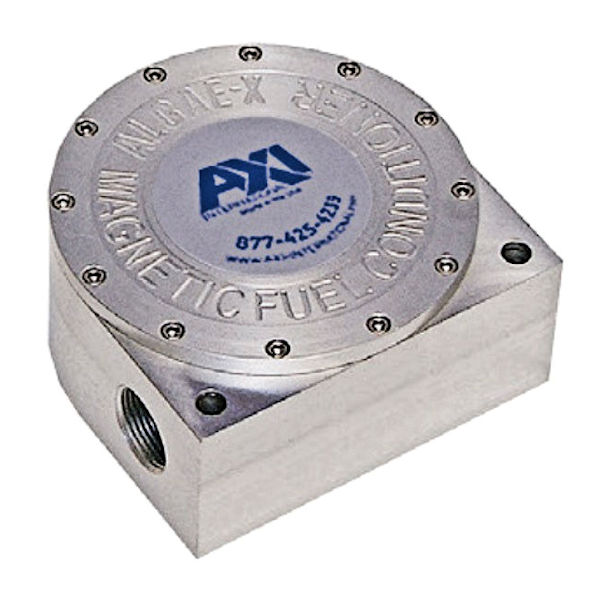
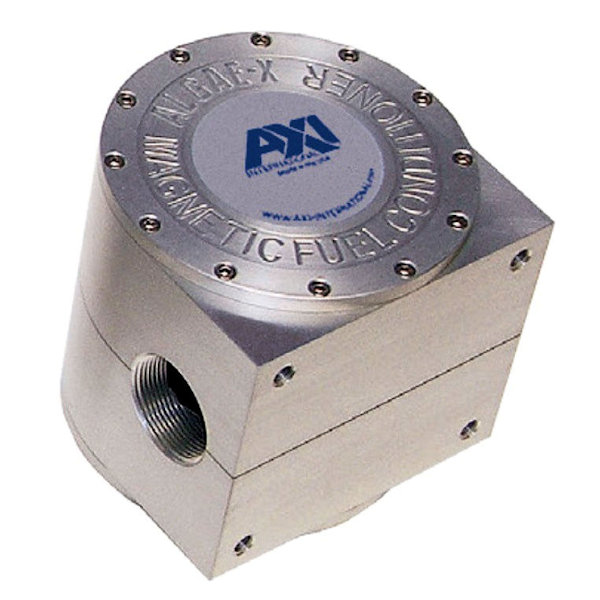
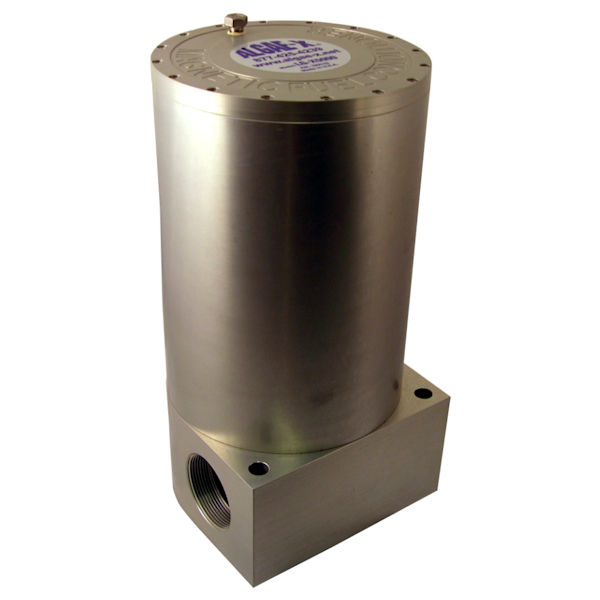
Frequent Filter changes and incurring the expense and inconvenience of cleaning fuel tanks have become acceptable periodic maintenance instead of a warning signal for engine failure. Filter elements should last a thousand hours or more, and injectors some 15,000 hours. However, since diesel fuel is inherently unstable, solids begin to form and the accumulating tank sludge will eventually clog your filters, ruin your injectors and cause engines to smoke. LG-X Magnetic Fuel Conditioners have overcome these and other issues in applications where fuel is stored or used.
Fuels and oils are susceptible to natural deterioration, like any other organic fluid. Oxidation, chemical incompatibility, water and microbial infestation all contribute to the process of polymerization and stratification of diesel fuel and other hydrocarbons. This results in poor Fuel Quality, and the formation of tank sludge, bio film and acids. These by-products of the process of fuel breakdown cause clogged filters, corroded injectors, pumps and tanks, incomplete combustion (evident from black smoke, caused by un-burned fuel, from the exhaust), carbon build-up on internal engine components, and loss of power. As these problems build on each other, these individual symptoms of bad fuel ultimately lead to complete engine failure.

Degraded Fuel Shortens Filter Life
and Hurts Engine Performance
Doing What Filters and Chemicals Can’t
Filters, separators, and centrifuges remove particles and free water from fuel. Biocides, commonly recommended by many mechanics to cure the ills of “algae” in fuel tanks, are really less than effective in the long term control of microbial activity. Neither, however, eliminates fuel instability or sludge buildup in tanks. Biocide treatments aggravate filtration problems by turning bio-sludge into solids. Removal of fuel tanks for cleaning with high pressure washers or steam (a favorite recommendation of equipment dealers) is expensive, takes equipment out-of-service, necessitates the removal and disposal of fuel from tanks, and is likewise ineffective and does not provide a long term solution.
A study by the University of Idaho determined that there could be as much as a 26% degradation in diesel fuel after just 28 days of storage.
Diesel Fuel is Inherently Unstable
Diesel engines continuously return fuel not used for combustion back to the tank. The repeated exposure to the heat and pressure of the injection system accelerates this breakdown of fuel quality. Fuel quality and fuel chemistry is affected by transportation, storage tank conditions as well as length of time in storage, and factors such as oxidation, water in the fuel, microbial contamination (contributing to acid formation), and incompatibility of fuel additive packages with after-market additives, etc. This toxic combination negatively impacts: (i) the filterability of the fuel through filters that become clogged; and (ii) causes a dramatic increase in the size of the fuel droplets emitted from the fuel injector into the combustion chamber. The degraded condition of the fuel, when combined with the injector degradation that occurs over time from the use of the degraded fuel, result in fuel not being completely burned in the combustion chamber causing the formation of carbon deposits on internal engine components, all evidenced by a noticeable increase in smoke from the exhaust, loss of power, and an increase in fuel consumption. (See “Diesel Fuel & Injector Failures” for additional information)
Dark, Ugly Fuel
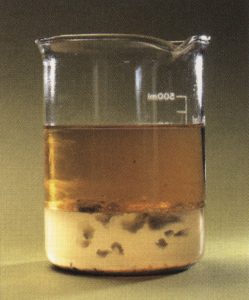 Diesel Fuel suffers from a perplexing problem with a natural tendency to degrade over time. This process can begin within six months of the time the fuel leaves the refinery and is aggravated by the high-pressure that fuel is subjected to in todays fuel injection systems. The extreme pressure and heat of these systems results in the agglomeration of asphaltenes present in the fuel, the high carbon content heavy end fuel molecules that are in solution when the fuel exits the refining process. Asphaltene agglomeration leads to the formation of larger and larger clusters and solids, which are very difficult to completely combust. They contribute to the degradation of injector spray patterns as injector orifices become partially or totally blocked. As fuel spray patterns become compromised, combustion of the fuel becomes incomplete, resulting in increased exhaust smoke and carbon build up on internal engine components. These solids grow so large that they will not pass through the filter element. They become part of the polymer and sludge build up plugging the filter.
If you have noticed diesel fuel that has been in storage having an appearance of dark brown or even black, then you have witnessed the agglomeration of this asphaltene component as it comes out of solution. As these clusters increase in size and gain weight, they will drop to the bottom of the fuel tank and, in time, accumulate into a dark mass. If you have inspected a fuel tank and noticed what looks like the bottom of the tank has been painted with roofing tar, then you have seen the result of this fuel degradation process.
Review the Frequently Asked Questions to the left to understand more about how Magnetic Fuel Conditioning can solve your problems with stored or degraded diesel fuel.
Additional Steps to Fuel Management
The LG-X Fuel Conditioners do a great job of maintaining the diesel fuel for optimal performance and efficiency. But if water is getting into your fuel tank, it can accumulate to the point that water will get to your engine and create havoc with your fuel pump and injectors.
Most fuel tanks have the fuel pick up line placed so that fuel is drawn from the fuel tank slightly above the bottom of the tank. This placement can be as little as one inch above the tank bottom, or up to several inches. However, many applications, such as marine craft and mobile equipment, especially in the construction industry, have so much movement, the fuel cannot help but slosh around in the tank.
This extreme movement prevents the placement of the fuel pickup line from preventing water that has accumulated in the tank from entering the fuel line. Capturing and removing water that would otherwise get into the tank is a critical component of fuel management.
The best defense in preventing the water from damaging engine components is a good offense.
Consider seriously taking steps to prevent water from getting into the tank. The most common means of water entry is through the tank breather vent. As fuel is drawn out of the tank, the area above the fuel is replaced by air drawn in through the tank vent. The air drawn into the tank contains moisture (in certain locations, a lot of moisture) as well as airborne debris, pollen, and fungi.
 The moisture condenses on the walls of the tank as the temperature changes. This water accumulates in the tank bottom. This process contributes greatly to fuel quality problems.
Using a Desiccant Breather Filter that is designed to incorporate Desiccant material to capture and hold moisture, along with a one micron air filter to capture and prevent debris and particulates from entering your fuel tank is a critically important defensive step.
Without an accumulation of water, microbial and fungi growth is prevented. The Desiccant Breather prevents the accumulation of water, which is the habitat in which the microbial contamination lives and reproduces. Microbes are eventually consumed by engine combustion.
The Desiccant material consists of crystals that absorb and hold the moisture. The Desiccant material expands and changes color from blue to pink as moisture accumulates, signaling that the breather has absorbed its capacity of moisture and requires replacement.
 But not all water comes in through the breather. Water can and does come into the fuel tank with the fuel. You are exposed to the results of how upstream fuel storage tanks have been miss-managed with every fuel fill.
This is especially problematic when the fuel is biodiesel as biodiesel has the ability to absorb more moisture than fossil diesel. (See article published by the University of Idaho BIOdiesel Tech) The solution is using the Water Eliminator fuel tank water remover.
This handy little solution is a cylindrical container that contains Desiccant material. Place the Water Eliminator in the tank, using the supplied lanyard to retrieve it for periodic inspection. The water specific Desiccant material absorbs water that has accumulated in the fuel tank while it lies on the tank bottom. When the Desiccant material swells up with absorbed water, remove it from the tank and replace it with another Water Eliminator.
Maintaining optimal fuel quality assures your fuel provides the most efficient operation and extends the life of critical engine components, thereby reducing your cost of operation and maintenance. Preventative maintenance has proves its worth over and over again.
Spar Parts Kits include an O-ring to seal between the face plate and the body of the Fuel Conditioner and new screws to fasten the face plate (except for the Kit for the LG-X 5000 that does not include the screws)
The LG-X Fuel Conditioners are drilled and threaded with NPT Threads. The below are adapters for use on LG-X Fuel Conditioners in applications where BSP thread connections are required.


